EN

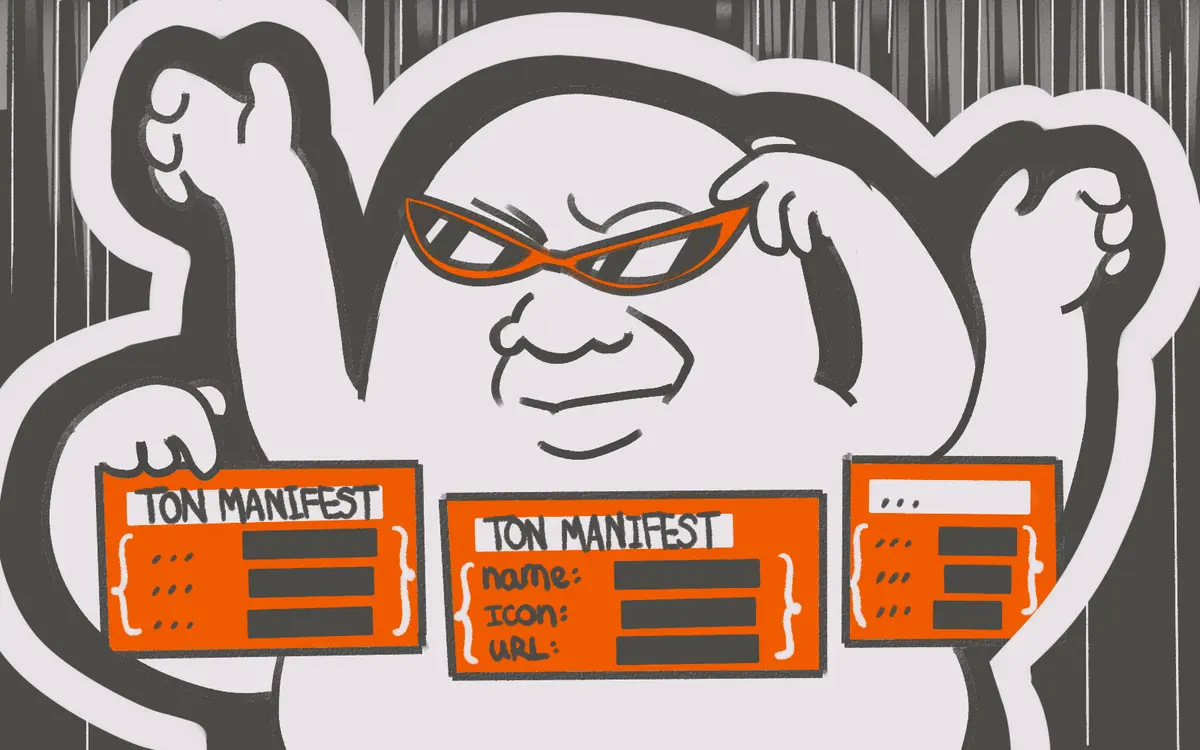
TON't Connect!: NOTe on securing TON Wallets”


In this article, we are looking into the ways DApp developers are able to exploit customization features and architecture flaws of TON Connect Protocol to impersonate legitimate DApps / Wallets, or even exploit vulnerabilities present in Wallets that target TON blockchain.

  • Wallet Impersonation
  • DApp Impersonation
  • Redirects from trusted context
  • UI Redressing
  • XSS: Sensitive data leak from Storages
  • XSS: Sensitive data leak via API requests

EN

Down the Drain: Unpacking TON of Crypto Drainers”


We've laid our hands on a few TON Crypto Drainers designed specifically to steal native coins, NFTs and Jettons, including: X-TonDrainer, Julia Drainer and TOD / The Open Drainer;

Analyzed their source code, classified them with Levels and discovered what features of legitimate products they exploit in order to appear less suspicious.

  • Level 0: Redirection, Verification Problem, Origin Forgery, Telegram Bots
  • Level 1.0: TON, NFT, Jetton, Altered Libs
  • Level 1.1: UI Redressing, Custom Wallets, Wallet Impersonation
  • Level 1.2: Forcing Actions, Events Tracking
  • Level 2: Local Storage, TON Connect Components, TON Connect Bridge MitM
RU

Plants vs. Bugs: Penetration Testing of a Smart Flower Pot”


The story of an IoT device black-box security analysis from the perspective of a curious Web / Mobile Application Penetration Tester.

It is a research of security issues of a smart flower pot through examination of a variety of entry points along the OSI stack and the interfaces that surround / are included in the Smart Home system, from the local control port to the mobile app.

  • Network attacks to impersonate the device / the update server
  • Discovery & Exploitation of Vulnerabilities of the Web Application
  • Sensitive information theft
  • Taking control over the device
ENRU

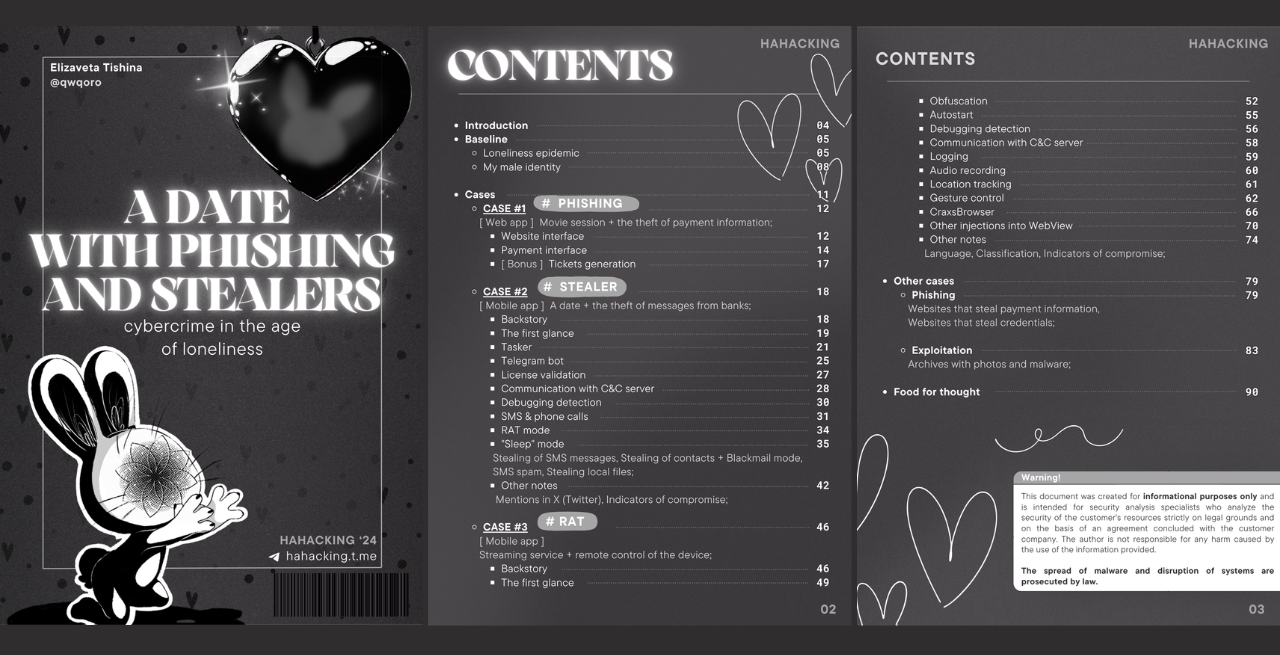
A Date with Phishing and Stealers: Cybercrime in the Age of Loneliness”


It's no secret that the problem of loneliness becomes more critical with every passing year, so much so that we can call it a real epidemic and this, unfortunately, will not even be an exaggeration. The modern solution is online dating, but where technology is, there are new ways to attack. It's a pity, but attackers will definetly take advantage of any technical opportunity and purely human vulnerability to achieve their goal.

This article may be useful for those who are interested in reverse engineering, malware or threat intelligence, as well as for anyone who uses dating apps and wants to know about the risks involved.

Together we will analyze in detail the delicate:
  • Phishing website that logs payment data
  • Mobile application that reads SMS from banks
  • Mobile application – RAT

  • Statistics of similar attacks
  • Social engineering techniques
ENRU

E-mail Injection; Injections into the Mail functionality of Web Applications”


It so happened that one of the solutions to the problem of collecting user responses is the use of e-mail. E–mail is a complex technology that uses a whole list of components.

In such a scenario, forms act as intermediaries between a number of components and a user, which, as is known from history, inevitably leads to the exploitation of vulnerabilities through user input – to injections.

And, since the attacker has a chain of components of various implementations at his disposal, such functionality is a spacious field for analyzing and conducting not one, but several types of injections at once.

Basics of E-mail:
  • E-mail Protocols
  • E-mail Components
  • Message structure
  • Special character sequences

Potential vulnerabilities:
  • CRLF Injection
  • Arbitrary Command Flag Injection

Demonstration of exploitation:
  • Application overview
  • NodeJS + smtp-client (CRLF SMTP Injection + E-mail hijacking)
  • PHP + mail() (CRLF SMTP Injection + Command Flag Injection)
  • Python + imaplib / email (CRLF IMAP Injection + Improper Input Validation)